Showing posts with label track intervals. Show all posts

Sunday, June 1, 2025

Tracksmith Twilight 5000

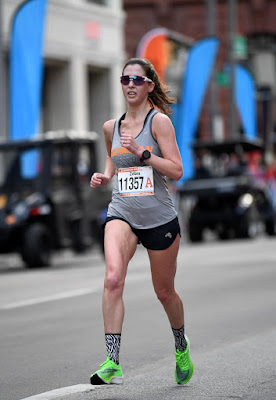
Last night I ran the Tracksmith Twilight 5000 in Washington DC. Normally I run 5Ks in the morning on the road, and I refer to them as "5Ks". This was a 5000 meter race on the track at night. It bore little resemblance to the 5K I know and love, even though the distance was the same.

Why I Registered
I was a pacer for this race back in 2022 and I really enjoyed it. The idea of racing a 5K on the track at night in the summer was completely unappealing to me, but I figured it would be fun to help someone else. After pacing it, though, I got the itch to run it myself. I was even signed up to run it either last year or the year before (I don't remember) but it was cancelled due to the weather. 

Pacing the 25:00 group in 2022
I registered because I wanted to see what it would be like to run a race on the track. I thought the vibe was really cool at the 2022 event and I love challenging myself in new ways. When I registered for the race a few months ago, I entered my predicted finish time as 20:20. I had run a 20:08 5K in February so I factored in some extra time for the heat. I had totally forgotten about the time I registered with when I received an email a week before the race with my heat assignment.

This race is run in "heats" of about 20-35 runners each. This avoids there being too many people on the track at once. Each heat has a different starting time. The faster the heat, the later the start time. Runners are assigned a heat based on their self-predicted finish time. I was placed in the 19:30-20:20 group. Having just run a time of 21:04 two weeks ago, I was really nervous about this. Realistically I thought the best I could hope for would be 20:30, which meant I might be the last finisher in my heat.

I could have emailed them to switch to the next slower heat, but I decided not to. I figured if I was going to challenge myself, I might as well go for it and see what would happen. I am typically pretty conservative with my race goals, but this seemed like the perfect opportunity to be more aggressive.

Race day eating and activities
I had no idea what to do with myself all day. I didn't want to do anything too strenuous, but I also didn't want to sit around and do nothing but get nervous. I decided I would spend some time making a different kind of Instagram video, explaining my pacing strategy.

In this video, I discussed how I would be using my Garmin as a stopwatch, not a GPS device, to pace myself. I would use the lap button and lap myself every 400m. My goal would be to run around 1:35-1:36 per lap and keep up with the 20:00 pacer. I had it all planned out and I visualized myself hitting that lap button and nailing those splits, just like I did when I paced the 25:00 group back in 2022.

Eating wise, I had a normal breakfast: Nova lox, a bagel, and a banana. For lunch I had rice pilaf, almond butter pretzels, and more nova lox. For dinner I had an English muffin with almond butter and a banana. I wanted to keep it pretty light. I ate my dinner at 4:30 for a 7:40 race start. I figured that would be plenty of time to digest the food. I felt like I had kept the food really light, but consumed enough calories so I wouldn't be in an energy deficit. 

I started to feel nervous right before we left the house with that "I have to go to the bathroom" sensation that never quite materialized. For morning races, usually I can empty everything out in advance.

Other things I did yesterday to distract myself included playing the piano and unpacking my CD collection from the moving boxes and organizing them by date, but without looking at the dates. My CD collection is like the sound track to my life from ages 15-30 so I remember the order they go in. 

Before the Race
We left the house at 5:30 for a 7:40 start. Even though I live much closer to Washington DC than I used to, it still took us 45 minutes to get there because this race was on the other side of the city, closer to Maryland. 

We arrived, parked and made it to bib pickup an hour before race start. Tracksmith was promoting their new Eliot Racer shoe which meant runners had the opportunity to test them out. They encouraged me to take a lap around the track in them, and I did. WOW - did I fall in love with this shoe. So soft and bouncy, very similar to my beloved adidas Adios Pro 2 but with even more bounce. These have the potential to be my new favorite shoe.

However, I currently have the many different carbon fiber plated shoes and I cannot justify the purchase of another one: Brooks Hyperion Elite 4 PB, Adios Pro 2, NB SuperComp Pacer, ASICS Metaspeed Sky, ASICS Metaspeed Edge, Mizuno Wave Rebellion Pro, Saucony Endorphin Pro 4, and Nike Alphafly.

I ran this 5000m race in my Nike Alphaflys. I had tested them out during two track workouts and they felt very fast with a lot of forward propulsion. I liked the Achilles-friendly 8mm drop and the fact that my feet weren't overwhelmed with cushion. I find the ASICS Metaspeed Sky to be too soft and the Saucony Endorphin Pro to be too firm, so the Alphafly was the perfect middle ground. I also really love the New Balance SC Pacer for short races, but I wanted to give the Alphafly a shot!

I changed back into my Nikes and ran a few more laps in the outermost lane of the track to warm up. I made multiple trips to the porta potty but not much was happening. 15 minutes before the race started I had a caffeinated Maurten gel. I debated having caffeine so late in the day and I knew it would bother my sleep, but I still did it. I figured I would be up late anyway, and lack of sleep would be worth it for the performance boost of caffeine. 

Weather
It was seasonably cool for May 31st. It was only 65 degrees, not humid (in fact, quite dry) and windy. If you were just standing around and not in a sunny spot, it felt cold. Greg wore jeans and a jacket. I warmed up in shorts and a lightweight jacket. 65 degrees is not exactly cool, but that wind was serious. On my personal weather scale I give this a 7 out of 10: somewhat favorable. With the sun having gone down below the buildings, the wind and the low humidity, the temperature was quite good. But the 16-18 mph sustained wind with heavier gusts made for a brutal 200m stretch! I am also thankful that it wasn't raining. We had quite the thunderstorm with hail earlier in the day!

The Race
Normally I break my race reports into a mile-by-mile recap, but that is not how I experienced this race. The whole thing was one big blur of "the same" and after the first mile I had no idea how many laps I had run because I wasn't even thinking about that.

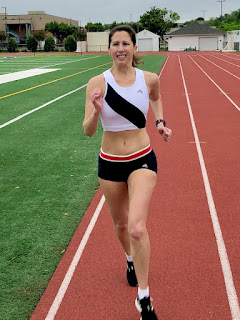
I'm wearing the race briefs!
As I said in my Instagram video, the plan was to hit my lap button every 400m, but the more I thought about it, I realized I didn't need that level of granularity and I would lap every 800m, and shoot for around 3:10-3:11. 

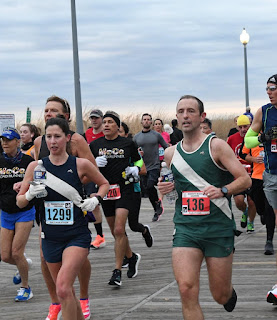
There were about 20-25 people in my heat. There was a 19:30 pacer and a 20:00 pacer. My friend Sergio was running, and I often find myself running very close to him in races. He wanted to run 20:00 as well so I told myself I would tuck in behind him and the pacer. I didn't really think I was in 20:00 shape, but I was going to go for it anyway. Who knows, maybe being in a pack would make me faster! 

We all lined up close to the start. I started in lane 1 (innermost lane) about three rows back. I could have been closer to the front if I started in a further lane. 

Oh how easy it felt that first lap! I felt so good that I was actually vying for position and wanting to be closer to the pacer! I had all the confidence in the world after lap 1 because I believed that pace to be totally sustainable. It was hard running on the track with so many other runners close by. Everyone wanted to be in lane 1, running at the exact same pace. There was only one point where I rubbed elbows with another runner but I somehow managed to keep my own space the rest of the time. 

I knew that Greg would have 12 opportunities to cheer for me and take photos and videos. I figured he would be moving around and I didn't know where or when to expect him. 

The first four laps were a dream! Here are my official splits, which start at 200m and then go every 400m.:

200 46.63
400 1:36.78
400 1:36.55
400 1:35.24
400 1:36.13

That's 1.12 miles of perfect execution! Shortly after that, my pack started to get ahead of me. It was weird because I was maintaining my effort level, but I was trailing behind. So I upped the effort. I really didn't


want to lose the pack because I needed them to block the wind. But no matter how much I pushed, they got farther and farther ahead. 

At this point I stopped focusing on my pace and how many laps I had run and I did everything I could to keep going. I developed a tight cramp in my upper abdomen. I am not sure if this was from pushing too hard in the beginning, from eating a larger meal than I normally would have, or maybe the caffeinated gel just "sitting" there. Whatever the cause, it got pretty gnarly.

I did not feel good or strong or fast. I felt like I was slogging away at a very slow pace. Everything felt heavy, the wind felt like a massive obstacle and the stomach pain was intense. And that's really all I have to report about the second two miles! I didn't count laps, but thankfully the football stadium scoreboard showed the official race time. I figured I would stop when that big clock got to be around 21 minutes. Yes, I had the same clock on my Garmin but I couldn't even bring myself to look at that. 

It was a blur of pushing hard, looking at the big clock and feeling the pain in my upper abdomen. I was also running completely alone and I was hoping there was at least one person behind me so I wouldn't be the last finisher. 

The final 200m was a tailwind so I sprinted as hard as I could and I almost caught the guy in front of me. He beat me by 3 seconds and had previously been much farther ahead.  More splits:

1:39.44
1:43.06
1:44.87
1:44.61
1:44.57
1:46.38
1:44.48
1:43.89

I was running slower than my half marathon pace for the last mile! 

My official time was 21:02. This was surprising to me because I had expected to be closer to 22:00, but I
guess I had a fast first mile to pad the rest of the race with. I the official race result, they group by age and gender I placed 2nd in my age group out of only 5 women. I am thinking these evening track races are more for the younger crowd! The fastest woman in my age group ran 20:55 so I wasn't too far behind.

After the Race
The next heat began almost immediately after ours was finished. Greg and I hung out for a bit and chatted with Sergio and a few other runners. We all agreed that the wind made this one tough. My nose was burning and running and I was sneezing my head off. This happens when I run really hard in low humidity. My nasal passage gets dry and irritated. The cramp went away about five minutes after finishing. 

Greg and I left the meet and had dinner at a local diner. I got chicken and waffles - a great combination of protein and carbs. 

Final Thoughts and Key Takeaways
This one was really hard. Much harder than anticipated. I was happy that my time was 2 seconds faster than my 5K time from two weeks ago, but I had to expend way more effort to do it. 

I knew 20:00 was an unrealistic goal, but sometimes you have to challenge yourself and just try and see what happens. I almost never do that, so it was a great experience to do it. I am pretty sure I could have run a faster time (maybe 20:45) if I started out slower and didn't crash and burn, but I took a risk. 

This race has motivated me to get back to where I was last summer. Last summer I ran a time of 20:28 at the hilly Firecracker 5K. I was consistently running speed workouts, lifting weights, and paying attention to my nutrition. For the past two months, the move has been front and center and taking care of myself has suffered. I haven't been focused on my nutrition, taking supplements, doing strength training, getting quality sleep, etc. 

Now that we are all settled in our new time it's time to get back to my normal fitness and wellness routine. I am proud of myself for getting out there and being aggressive even though it meant a painful and sluggish second half. It was a fun event and it has lit the fire in me to get back into my training groove.

Thursday, February 17, 2022

The Ultimate Tracksmith Gear Review

Ah, Tracksmith. The brand I love to hate and hate to love. 

What is Tracksmith?
Tracksmith is a high-end running apparel company based in Boston, MA. Founded in 2014, the brand markets itself to the "amateur" runner, with "amateur" meaning not professional, but definitely competitive. They even sponsored runners in the 2020 Olympic trials.

They sell primarily running clothing with a few overpriced accessories like an umbrella ($88), sunglasses ($255), and a necklace ($600). Their prices are about 50-80 percent higher than traditional brands like Nike, adidas, New Balance and Saucony and their color palate is somewhat muted, understated and neutral.

They rarely have sales and you have to spend $150 to get free shipping. They don't sell through any distributors that I know of. You can buy their clothing online or in their Boston store. They have a program called "Hare AC" which gives you a $100 gift card if you set a PR while wearing Tracksmith gear. You need to submit proof that the race was a PR and you were wearing Tracksmith. This program costs $198 to join, although it does come with a singlet and you get free shipping without having to spend a minimum amount.

Tracksmith gear has become somewhat of a status symbol in the running community, and I think that is their goal. If you wear Tracksmith you are saying, "I am a serious runner who spends serious money on my gear."

Hate to love and love to hate
Based on my description above, you can probably guess why I hate to love and love to hate this brand. I hate to love it because I have spent way too much money on their gear. I really do not need to pay for expensive running clothing, but I do anyway. I also hate to love it because I'm not a status symbol person. I don't buy designer handbags, belts or shoes. And yet I believe Tracksmith to be a status symbol.

I love to hate Tracksmith because I find the advertising to be a little pretentious and the prices for some of the items to be ridiculous ($48 for a pair of running undies!). They also have some really ugly items that I can't believe people would get. Their Black Friday deal was something on the order of "spend $150 this week and get 10% off a future order". Wow- how generous. 

Outside the Boston store
So then why do I have so much Tracksmith stuff? It makes no logical sense! It's an emotional purchase, for the most part. I enjoy the material (it's unlike traditional brands), the packaging, and the styles (for the most part). The pieces are high quality and they have a unique aesthetic. I like that the brand stands for the competitive amateur, and I feel fast when I wear it. That's excellent marketing. 

As a marketing professional myself, I applaud them for having marketing campaigns that are so effective, runners are willing to pay nearly twice the price for their gear. Good marketing appeals to the consumer's emotions. Want to show up at a race and look fast? Feel fast? Have disposable income? Tracksmith is the brand for you. 

They do have excellent customer service and if you need to exchange your item for a different size, they will ship it out to you immediately without having to purchase another item and/or wait for your return to be processed. I find that their items run true-to-size or slightly small. I wear an XS in everything except for the Bell Lap top. 

With that said, I will now review some gear items from Tracksmith. 

On a scale of 1-5 with 5 being "excellent" and 1 being "poor" - here are my thoughts.

The Van Cortlandt Singlet ($65)
This is a lightweight loose-fitting singlet available in both men's and women's versions. Usually when you think about Tracksmith, this is the singlet that comes to mind as it is their signature piece. They come out with new colors each season. I have 3 of these and Greg has 1. If you want other runners to know that you are wearing Tracksmith, this is the piece you get. I think this singlet is okay. It doesn't have much shape to it but it looks fast!

  • Comfort: 4
  • Fit: 3 
  • Material: 4
  • Style: 3
  • Value for money: 3 
The Van Cortlandt Singlet

The Twilight Tank ($62)
This fitted tank is available in both men's and women's versions. I prefer this tank to the Van Cortlandt Singlet because it's more flattering and less boxy. The material is super comfortable and lightweight. I have two of these and would probably buy another one if they came out with a color I really liked. Note, in 2021 the price of the Twilight Tank was $52, and I ranked it a "4" in Value for Money. Now in 2022 it is priced at $62 so I have downgraded it to a "3". 

  • Comfort: 4
  • Fit: 4
  • Material: 4
  • Style: 4
  • Value for money: 3
Tracksmith Twilight Tank

The Bell Lap Top ($75)
This is a women's crop top that does not have a built in bra. So far Tracksmith has not come out with a bra that supports my cup size (32D) so I wear a regular sports bra under this crop top. I'll be honest, the main reason I like this top is because it looks fast and feels fast. The material is heavier than I would like. They re-modeled this piece at some point in 2020, making it smaller. I like the new version better than the previous version because the fit is more streamlined. I like to race in this top because it looks fast!

  • Comfort: 4
  • Fit: 4
  • Material: 3
  • Style: 5
  • Value for money: 3
The Tracksmith Bell Lap Top


Lane 5 Crop Top ($72)
This Crop Top is similar to to the Bell Lap top. It looks almost identical to the Bell Lap with the exception of the signature diagonal stripe, which is reserved for the Bell Lap. The Lane 5 is just a tad longer, too. The Lane 5 Crop Top can be worn with or without a bra underneath it, depending on how much support you need. I definitely need a sports bra under it, but I have talked to another woman who doesn't wear a sports bra under hers. A non-padded, slim profile sports bra like the Nike Fe/Nom Flyknit or the Zensah Gazelle 2.0 are both good options to wear under Lane 5 for extra support. This top fits me a tad looser than the Bell Lap top. The Bell Lap is slightly more compressive. As you can see from the ratings below, I don't have a preference of Lane 5 or Bell Lap. They are almost the same top in my book with a $3 price difference. 
  • Comfort: 4
  • Fit: 4
  • Material: 3
  • Style: 5
  • Value for money: 3 
The Tracksmith Lane 5 Crop Top (and Lane 5 Shorts)


The Harrier Long Sleeve ($84)
This long sleeve shirt is available in both men's and women's versions. As far as long-sleeved t-shirts go, this one is super comfortable and flattering. But that's for everyday wear. I don't particularly like running in this shirt because when you sweat the material gets wet and it noticeably looks wet. It doesn't seem to breathe as well as other running tops. I like this shirt as an everyday shirt or something to slip on after a race. So if you want to spend $84 on a comfy t-shirt to throw on after a run, go for it!
  • Comfort: 4
  • Fit: 4
  • Material: 2
  • Style: 3
  • Value for money: 2

The Tracksmith Harrier Long Sleeve


The Brighton Base Layer ($88)
This long sleeve shirt is available in both men's and women's version and both Greg and I have one! Actually, I have two. I really like this piece. It has the signature diagonal stripe, but it's less pronounced because it's the same color as the rest of the shirt. It's form-fitted and has a long length. I wore this shirt in a snowy 5K and the snow stuck to shirt instead of the shirt soaking it in, which kept me warmer than a traditional long-sleeve. I love this fit, the fabric and the style. I highly recommend this one. Note: this is one of the few items that has NOT increased in price from 2021 to 2022. 

  • Comfort: 5
  • Fit: 4
  • Material: 5
  • Style: 5
  • Value for money: 4
The Brighton Base Layer

The Downeaster ($148)
This merino wool top is my absolute favorite Tracksmith piece! I have 3 of them plus the "Wind Block" version ($188). If you only buy one Tracksmith piece in your life, it should be this. It's a lightweight material but keeps me warm in cold weather. I find that it's ideal for temperatures in the high 20's to low 30's and I don't wear anything underneath it. For colder temps I would probably throw a tank on underneath. The Wind Block version works well on those brutal cold and windy days. I wore it in 26 degrees with 12 mph winds and felt comfortable. I haven't seen anything similar from other brands aside from Smart Wool, which is also pricey. You do need to be careful when washing this top. Delicate cycle only and line dry.
  • Comfort: 5
  • Fit: 5
  • Material: 5
  • Style: 5
  • Value for money: 4
The Tracksmith Downeaster

The Turnover Half-Zip ($128)
This long-sleeve half-zip comes in both men's and women's versions. I feel like all running apparel brands have their signature long-sleeved half zip for cold weather and this is Tracksmith's. I really love the material on this one. I wear the Downeaster on easy runs and easy-paced long runs, but I break out the Turnover Half Zip for speed work. The Downeaster is a cozy feeling while the Turnover is a "work hard" feeling. It wicks the sweat well and is best for temperatures in the high 20s to low 30s if you are doing speed work. (Disclaimer: I am a warm runner so most people would probably wear this in the high 30s to low 40s). I think this piece is rather pricey for what it is and you can get similar things from other brands, but I do like it quite a bit. It's a little short in terms of length, but I appreciate that for the sake of performance.
  • Comfort: 5
  • Fit: 4
  • Material: 5
  • Style: 4
  • Value for money: 3
The Turnover Half Zip w/Turnover Tights


The Trackhouse Crew ($110)
This sweatshirt is basically just a really nice sweatshirt. I don't think it's meant for running (I don't run in it), but it's nice to throw on after a cold race and before you have a chance to shower. I wear mine while working from home and while out running errands. It has a boxy cut and it's on the shorter side. Sweatshirts are "in" right now this one is about as stylish as you can make a sweatshirt. I have one of these from 2019 and from 2021, and they seemed to have changed it during that time. The 2019 shirt is light material while the 2021 is more substantial and heavier. I like them both - but I probably prefer the newer, warmer version. If you want an arguably over-priced sweatshirt, this is a good one to get! Note: in 2021, this sweatshirt was priced at $98 and I rated it a 2 in "Value for money". Now in 2022 it's $110 so I have downgraded it to 1. I'm glad I bought mine before inflation hit!
  • Comfort: 5
  • Fit: 4
  • Material: 4
  • Style: 3
  • Value for money: 1
Trish: Brighton Base Layer. Me: Trackhouse Crew

The Session Jacket ($128)
This lightweight jacket is perfect for warming up before a workout or cooling down afterwards. It's fitted, sleek and versatile. You can also wear it at the beginning of a long run and then throw it in your car as the temperature starts to warm up. Or you can wear it as a normal everyday jacket. 
  • Comfort: 4
  • Fit: 4
  • Material: 4
  • Style: 4
  • Value for money: 3
The Session Jacket

Lane 5 Short Tights ($68)
These form-fitted shorts are great if you like a tight fit. They have a 5" inseam. Most all form-fitted shorts ride up to some extent; and these do a little bit. But once you have sweated and gotten the material nice and wet, they tend to stay put! I wear these shorts in warm and humid weather and in the rain. Overall, these shorts are okay. I don't think they are anything special in terms of a tight-fitting short. I much prefer the "First Place" by Rabbit, which are shorter but seem to fit me better.

Note: When these shorts were priced at $58 back in 2021, I rated "value for money" a 2. But now in 2022 the price is $68, so I have downgraded "value for money" to 1. Some people love these shorts, but I think you can get better fitting compression shorts elsewhere.
  • Comfort: 3
  • Fit: 3
  • Material: 4
  • Style: 3
  • Value for money: 1
Lane 5 Short Tights

Bell Lap Shorts ($75)
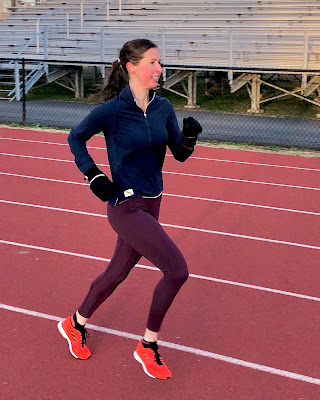
These fitted shorts are almost the exact same as the Lane 5 Short Tights, only they have a 3" inseam as opposed to a 5" inseam. Just like the. Bell Lap top, they re-modeled this piece at some point in 2020 or 2021. I prefer the previous version, which you can see in the very first photo of this post. The new version doesn't have the roll-over waistband, which I liked, and these shorts do ride up. I would not wear them for racing, which is their intended purpose. My favorite form-fitted racing short is the First Place by Rabbit. Finally, there is absolutely no reason why these shorts should be priced higher than the Lane 5 Short Tight (above) They are practically the same thing, only the Bell Lap has less material.
  • Comfort: 2
  • Fit: 3
  • Material: 3
  • Style: 3
  • Value for money: 1

The new Bell Lap Shorts

Twilight Split Shorts ($62)
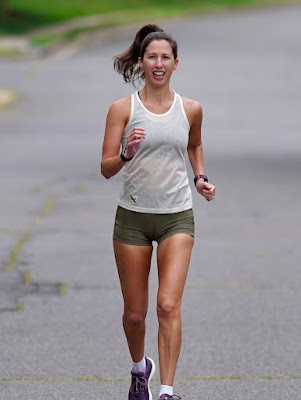
These loose fitting shorts are light and fast! They are available in both men's and women's versions. These shorts are comfortable and fast feeling, making your leg feel "free". They are great for speedwork and races. I prefer them to the Session Shorts ($68) which I will not review because they re-modeled them recently and I don't plan on buying the new model. The best thing about these shorts is the fabric - really light and smooth to the touch! At some point around 2020, they re-modeled this short, making them slightly longer, baggier and with more of a side slit. I'm wearing the original model in the first photo below, which I prefer to the new version. like a more streamlined fit. But the updated version is pretty good too-- the slit is pretty intense though! These shorts increased in price from $52 to $62 from 2021 to 2022. 
  • Comfort: 5
  • Fit: 4
  • Material: 5
  • Style: 4
  • Value for money: 3
Tracksmith Twilight Split Shorts- original version


Twilight Split Shorts - updated version 2022


Van Cortlandt Shorts ($64)
These mesh shorts are another signature Tracksmith item that pair well with the Van Cortlandt Singlet. I really like the men's version of these on Greg but I'm not in love with the pair I have. I only have one pair (which I bought to go with the singlet) and I don't plan on buying another. I don't like the tie on these shorts- I prefer elastic waistbands with no tie. These shorts have chafed me on runs and the fit is sloppy on me. I like the burgundy color and the way they match the singlet, but that's about it.
  • Comfort: 3
  • Fit: 2
  • Material: 3
  • Style: 4
  • Value for money: 2
The Tracksmith Van Cortlandt Shorts


Turnover Tights ($128)
I have a pair of these tights in normal length and in capri. I like them quite a bit and I wish they would bring back the capri length which doesn't seem to be listed on their site anymore. I don't have any other tights from Tracksmith because I have so many tights already and I've been able to resist the "emotional purchase" for some reason when it comes to tights! These are lightweight and and fitted without having compression. They are fast and they perform well. I wear them for long runs and speed work. I might get another pair at some point. The website describes these as "a cold weather running tight" but I find them to be light and I would probably want something warmer if it were under 25 degrees. 
  • Comfort: 5
  • Fit: 4
  • Material: 4
  • Style: 4
  • Value for money: 3
Tracksmith Turnover Tights w/Downeaster top


Conclusion
Is Tracksmith an emotional purchase? Yes. Aren't most purchases emotional? Yes. Do we like to admit they are emotional? No. If you have never tried Tracksmith and you want some starter pieces, I recommend the Downeaster top, the Brighton Base Layer, and the Twilight Split Shorts. I love the style, material and comfort of these pieces. Tracksmith items make excellent gifts for your runner friends and family because it might be something they like but wouldn't buy for themselves. 

Saturday, June 27, 2020

Virtual Race Report: Indianapolis Monumental Mile

Yesterday I ran the Virtual Indianapolis Monumental Mile on the track with Greg. I had been training to run the mile distance for about 4 weeks.

Time Trial #1
On May 25th, I ran my first ever timed mile. I had absolutely no idea what I was in for. I've read many 1-mile race reports over the past few years and I even spectated a 1-mile track race about eight years ago. However, I never had the desire to race this distance. In the spirit of taking on new challenges during the Covid era, I decided now would be the time.

We decided that Greg would go first and I would time him using my phone's timer. I would collect his lap data and cheer him on. Then it would be my turn. He would take photos and videos and cheer me on. You could make the case that we would have been faster if we ran at the same time, but I wanted to "run my own race" and not be distracted by what he was doing.

My biggest fear was totally blowing up and running far slower than my capability. So I decided to start on the slower side and finish with a hard sprint.  My goal for the first time trial was simply to get a baseline for future time trials, but I decided I would shoot for 6:00.  My splits for each 400m lap were:

1:32 (1:32)
1:33 (3:05)
1:30 (4:35)
1:26 (6:01)

My time was 6:01.8. I was good with this time, although given how fast my last lap was, I wished I had gone out faster. Greg ran 5:46.

Time Trial #2
Our second time trial took place one week later on June 1. I should note that the weather for both the first and the second time trials was unseasonably cool. Mid 50s with low humidity.

Now that I had some practice under my belt, I decided I would try to go out more aggressively and run sub 6:00. I also knew that my mental game needed to be stronger. During the first time trial I kept having visions of stopping and not finishing the whole thing. For time trial #2, I vowed that I would stay positive the entire time and remind myself to push as hard as possible while staying relaxed.

1:30 (1:30)
1:32 (3:02)
1:29 (4:31)
1:25 (5:56)

My time was 5:56.0.  Over 5 seconds faster! Once again, I felt like I was flying during that last lap and I wished I had gone out faster. Greg ran 5:40, so we both shaved nearly six seconds off of our first attempt.

Time Trial #3
Once again, we waited one week and ran another time trial. It just so happened that Mondays offered the unseasonably cooler weather. It was in the upper 50s and sunny, but the humidity was low. I promised myself I would go out even faster and I would push, push, push all the way through. With two time trials behind me, I was much more confident in my abilities.

1:30 (1:30)
1:28 (2:58)
1:28 (4:26)
1:26 (5:52)

My time was 5:52.5, a PR by 3.5 seconds! I was so thrilled with this. And for the first time, I felt like I really gave the run everything I had in me. I was totally and completely spent by the end. After the first two time trials, I felt like I still had more to give. Greg had similar gains, running 5:37.

The Race
I wore briefs for the first time. Felt so free!
For the virtual race, we were allowed to run on any date between June 22 and June 30, so the race is still going on. We picked yesterday, which had the coolest weather. It was 62 degrees, compared to all the other days that were around 70. It was a humid 62, though, so it was definitely not as nice as any of the previous 3 attempts. I had no idea how much of a factor the weather would be for a race that lasted less than 6 minutes. I mean, how much can the humidity really get you in such a short time span?

Turns out, both Greg and I felt flat. I didn't feel like I had the power that I had during my previous attempts. My goal was to break 5:50 and run the first lap in 1:28. I think it was partially the weather but also partially that I just didn't feel great. Training in the heat has a cumulative effect so even if the actual race has good weather, if you've been training in crappy weather in the week leading up to the race, you likely won't feel your best.

Ironically, this is what happened at the Indy Monumental Marathon in 2017. I trained really hard during an unseasonably warm autumn. The race weather, however, was ideal. And yet I totally crashed and had a horrible race. My splits were:

1:31 (1:31)
1:31 (3:02)
1:30 (4:32)
1:26 (5:58)

My time was 5:58.0. When I saw my split for lap 3 I knew I needed to book it just to break six minutes! It seems like I am consistently able to run 1:26 in the last lap, but I can't seem to get myself to push harder earlier. I don't know if that's lack of confidence or that my legs need to warm up more. I was really, really hurting by the end and it took me a while to feel recovered after I finished. I felt like I pushed harder in this virtual race than the other time trials, and that is supported by the heart rate data below.

Before these time trials, I do drills and a few 100m strides, so I feel loose and ready to go.

In any event, I was happy that I ran sub-6:00 but disappointed that I didn't reach my goal of sub 5:50. And just like in the time trials, Greg was slower than his PR, too. He ran a 5:42. Both of us were faster than time trial #1, but slower than the other two trials. It was just not the day to PR.

Because I love charts:

Date
 Lap 1 
 Lap 2 
 Lap 3 
 Lap 4 
 Time 
 Average HR 
 May 25  
 1:32 
 1:33 
 1:30
 1:26
 6:01.8
 158
June 1
 1:30
 1:32
 1:29
 1:25
 5:56.0
 151
June 8
 1:30
 1:28
 1:28 
 1:26
 5:52.5 
 158
 June 26
 1:31
 1:31
 1:30
 1:26
 5:58.0 
 160

As for my training, my has been relatively low, as it tends to be in the summer. I plan to take the month of July very easy and then start adding more volume in August.

Sunday, June 21, 2020

160 Days of Running

Today I hit day 160 of my run streak! Not having a marathon to recover from makes it possible for me to run every day and I am lucky that I can do so without injury or illness. I have no idea when I will end the streak, but I hope it's by choice when it happens. Here are some highlights of the past 30 days.

Training for the Mile
I'm training for the Indianapolis Monumental Mile. This is a virtual race when I can run at any time between June 22-30. I'm planning to run it on Friday or Saturday and will blog about it once I do. The beauty of training for a virtual mile is that I've never raced the distance non-virtually. So I am only comparing apples to apples where a PR is concerned. My goal is sub 5:50.

My coach has prescribed some high-intensity speed work on the track which has really helped build my confidence and ability to pace. I've done 3 time trials on the track, which I will write about in more detail when I recap the virtual race. I've managed to get faster and faster each time, which I mainly attribute to knowing how to pace it and gaining the confidence to start fast. My biggest fear with this distance is crashing and running far under my capability.

Strength Training
I started working with a running-specific strength coach at the end of April. We have weekly sessions over Zoom and in between those sessions I have a program I do on my own. I really like the accountability of a coach (since I always seem to have an excuse for not strength training) and I like having the feedback on my form. Plus, she has been able to identify my areas of weakness and build a personalized program.

Most of the exercises are compound exercises which require a very stable core while I am lifting a weight or pulling a band. Glutes and hips are a big focus, but also the lats and the shoulders of the upper body. I do feel like I have more power when running and that I can get my knees higher and drive forward more efficiently.

Snake in the Basement
My run streak almost ended on day 150. I woke up feeling abnormally tired. I felt lethargic and like I didn't have my normal energy. That was a "yellow light" for me, meaning that I might be on the verge
This snake was in our basement
of full-blown mono, so I decided not to run that morning. I figured that I could always run later in the day on the treadmill if my energy level improved.

This turned out to be a blessing in disguise. I had planned to run on the treadmill, but since I didn't, Greg went down to the basement first and he saw a snake! This prevented me from having to see the snake, or run on the the treadmill with a snake nearby. I was able to find a local snake expert to come by and help, but by the time he arrived, the snake was nowhere to be found.

The adrenaline of the snake situation really perked me up and by the end of the day, I felt completely normal. I decided to run just 2 miles outdoors to keep the streak going. No way was I going into the basement! Thankfully, Greg heard the snake moving around two days later, called the snake expert, and he was able to come over immediately and remove the live snake with his two hands! It was a lot larger than I had imagined. We think we identified how it could have gotten in and sealed up that area.

Poconos Mountains
The Lodge at Woodloch
We dealt with the snake just in time to leave for a mini-vacation to the mountains. We were so worried that we'd be gone for four days and that snake would just be hanging out. Greg and I booked a 4-night stay at the Lodge at Woodloch-- and all-inclusive spa retreat in northeastern Pennsylvania.

We really just wanted to get away, take some time off of work and focus on relaxation. We didn't do much while we were there other than relax, eat, and take in the beautiful scenery. The running situation was challenging. It was the mountains so all of our easy runs had insane elevation gains and losses. One of the runs was only 5.4 miles but had 540 feet of gain! I usually don't even run that much gain during a long run.

Thankfully, two of the four days were prescribed track workouts. We found a high school track that was relatively close to our resort and we were able to run on a flat surface. The weather was amazing. Each morning it was in the low 50s with low humidity. A dream come true! During the day, it would rise to the low 70s, still with low humidity. We were truly blessed, particularly because we had to eat all of our meals outdoors.

Lucky Leprechaun
When the St. Pat's 10K was canceled last spring, I signed up for a smaller race: Lucky Leprechaun. But 24 hours after registering, that race got postponed to June. And then at some point in May it turned into a virtual race.

I had pretty much forgotten about it, which was kind of a shame because we had unseasonably cool and non-humid weather on the morning when the virtual race was to occur (June 13th). Instead, I had a long run on the calendar. So I decided to run 11 miles at my easy long run pace, and then restart my Garmin for 3.1 at the end.

The 11 miles averaged 8:28 and then I ran a 5K in 22:41. Splits were 7:18, 7:19, 7:15 and 6:50 for the last 0.11. This was good for 5th female out of 190. Not to shabby, given my 11-mile warm up! I was encouraged that my endurance was still in a good spot if I could start hammering really hard at the end of a long run.

Fall Races
I am still undecided about my fall race plans. I originally signed up for the Rehoboth Beach Marathon because I wanted to run a late fall race. But now that we are no longer going to be in Africa at the end of August and into early September, I could start training earlier and run an earlier marathon. I am actually looking at running the Marine Corps Marathon for charity because it's local and I have not run it since 2006. As of now, the Marine Corps Marathon is not canceled so I am optimistic.

Another choice would be Philadelphia. That has been on my list for a long time and I've never done it. It would not require a flight and the weather is likely to be cooler than Marine Corps. Pennsylvania, however, is one of the the strictest lockdown states, so I am not as optimistic about that race occurring.

I do have a hotel reserved in Indianapolis. I ran really well there last year for the half marathon and was hoping to return. But it does require hopping on an airplane and it will not be a new experience. Indy Monumental is currently planning to have both a real race and a virtual race. Indiana is not as strict with their lockdown as other areas, so it could actually happen!

Rehoboth is still a possibility, but I might want to save that for 2021 because we are planning to go to Africa in August of 2021 and we will need a later fall marathon. I've heard that Rehoboth Beach is very strict with their lockdown, so that race might not actually occur.

We're coming up on a particularly warm and humid week here in the DC area, so I need to take it easy in preparation to race the virtual mile this weekend.

It's pretty humid here!

Wednesday, January 22, 2020

Social Media or Controlled Media?

When I first started this blog on MySpace about 15 years ago, it was very much of a journal in which I let my closest friends into my thoughts, feelings, struggles, and more. At that time, I had an audience of about 30 people. But that audience was super engaged and interested in what I had to say, and MySpace made sure that all 30 people saw my blog posts.

When I moved it to blogger in 2009 without any privacy restrictions, I stopped writing personal details and kept it strictly to running. My audience was still limited, though, because I didn’t actively try to grow my blog following. I sometimes shared my blog posts on Facebook, but there was only a small number of people who cared to read my long and drawn out race recaps. I was fine with that. My primary audience was me, as I wanted to keep a record of all my running experiences. I was actually surprised when people read my blog and took interest in the details of my running.

Then, in 2016, I started writing daily posts on Instagram where I got even more exposure, mainly for the purposes of promoting my book, Boston Bound. And before I knew it, my audience there skyrocketed and within a year, I had over 10,000 followers. Those were the glory days, before Instagram had an algorithm that controlled the posts its users’ feeds. Posts were simply displayed in the order in which they were published.

I don’t know anyone who favors the algorithm over chronological order, but Instagram doesn’t even give users a choice anymore. In fact, I created a poll in my Instagram story and 95% of users said they would prefer pictures to appear in the order they were posted, and this poll had over 400 responses! Today, Instagram has become so corrupted with bots and fake followers, as well as its own penalties to punish bots and fake followers. Instagram claims its sole objective is to make the community a “safe space” to engage, but actually its sole purpose is to make money, and to do that, it needs to tightly control what people see.

I’m in marketing, so I get it. Instagram (owned by Facebook) is a business and the purpose of a business is to make money. That’s fine, but please just be honest about it! Don’t pretend that you are making changes to improve the user experience when in reality you are trying to maximize your profits from advertisers. As much as Instagram claims that it rewards great content by promoting it to a larger audience, it’s all a computerized algorithm and I’ve cracked the code on what Instagram does and does not like.

Instagram algorithm doesn't like the track
For example, my track photos consistently get fewer views, likes, and comments than my other photos. Even though those are some of the toughest workouts I do! Why? The algorithm sees the track and/or field and something about that pattern indicates the post is of lower quality. Keep in mind, I have been posting on Instagram almost every day for 3+ years, and my lowest performing posts are always the track workouts.

Instagram also doesn’t like colored blocks of text. Sometimes to make my posts more attractive, I use colored text vs. simple black and white. But without fail, any time I put a colored text box in my photo, it reaches a much smaller audience. Also, if I edit the caption after posting the photo, engagement numbers go way down. Editing is a big no-no.

Thankfully, I can still come here to my blog and express myself without the Instagram algorithm controlling who sees it. Now that I’ve given some background on where I’m coming from, I’d like to express two major gripes I have with Instagram.

Removing the Like Count
Instagram is removing like counts from photos. If you can still see like counts, chances are that you won’t be able to see them for much longer. My ability to see like counts was removed several months ago. This means that when I scroll through Instagram, I can’t see how many people have liked someone else’s photo.

I can still see how many people liked my photo, but I have to take an extra step by tapping on “and others” for the total number to come up. This confuses the heck out of me. Instagram says they are doing it to make the platform a “safe space” where users aren’t pressured by the number of likes their photos get. But I can still see my own likes! Doesn’t that defeat the whole purpose? The only thing that’s changed is I can’t see other people’s likes, and I have to take one extra step to see my own likes.

My theory is that Instagram is doing this for . . . CONTROL. As I mentioned above, they need to maintain tight control over the platform for maximum profit, and that means control over data. If likes are no longer public data, then how will businesses know which influencers have the highest engagement rates? They won’t, which means they might lean more towards paid advertising with Instagram. Eventually, businesses will have to pay Instagram for access to engagement data. You want to run an influencer marketing campaign? Well, you’ll have to pay Instagram first to know which influencers to use. Today, businesses are bypassing paid advertising on Instagram by using influencers, and Instagram wants its cut.

I have no problem with this, but I DO have a problem with Instagram saying they are doing it to make it a “safe space”. If users can still see their own like counts, what is the point?

Finally, Instagram likes are basically the result of an algorithm. I see very little correlation between the posts I think are really great and how many likes they get. I know that certain elements will trigger a greater reach from the algorithm, and therefore more likes. I would never take it personally! I know that my track workout photos will get far fewer likes, but that doesn’t mean I am going to stop posting them or feel badly about it. It’s a computer.

Penalizing Valid Accounts
Instagram penalizes accounts that it thinks are violating its terms of use. That seems logical, right? Yes, but they are once again using a computer algorithm to determine which users should be penalized.

Last Saturday, when Greg was doing his long run and I was at home waiting for the pool to open, I decided to check out the Houston Marathon hashtag along with some other running hashtags. I ended up liking and commenting on more photos than I usually do. And I did it all within about 30-45 minutes.

No like count!
On Sunday morning, when I opened Instagram, they required me to provide my cell phone number for two-factor authentication before I was allowed to do anything. I didn’t want Instagram having my phone number. I Googled it and I found out that this means Instagram suspects me of being a bot, so the phone is required to confirm I am a human. UGH. Okay, so now Instagram has my phone number that it can sell to any number of advertisers.

Since giving my phone number to Instagram a few days ago, I have received several spam text messages, using my first name. I used to get spam texts, but never with my name being used.

Once I had access to my account, I started posting and interacting as I normally do. But my daily post had very little reach compared to my other posts. The same thing happened to me again on Monday, and I realized that my post wasn’t being shown for any of the hashtags I was using. I Googled this problem, and I learned that I was “shadow banned”. This is a 14-day ban for accounts that violate the terms of use. The only thing I can think of that caused this was that I liked and commented on more posts than I typically do on Saturday. Apparently users can only like 3 posts per minute over a 1-hour period.

Can’t we just go back to MySpace, when social media was about expressing yourself and not a numbers game?

Sunday, December 1, 2019

CIM: Training Cycle in Review

I'm wrapping up my training cycle for the California International Marathon (CIM) and I feel great. I'm noticing a huge difference between how I feel mentally between this cycle and my Shamrock cycle in the spring, when I DNF'ed.

Last spring, I was feeling really stressed. I was in the process of interviewing for new jobs and exploring multiple opportunities. I also felt like I had over-scheduled myself in general and I was feeling really overwhelmed trying to fit everything in.

This cycle, I am perhaps the calmest I have ever been. I don't have anxiety about my race, my
schedule, my job, or anything else in my life. And that has made all the difference. For the past several years I have realized how much stress and anxiety were holding me back, but now that my job is less political, I feel particularly chill.

Ironically, I have more responsibility and more work travel than ever before. I'm the Chief Marketing Officer of a tech company, which means I'm not only responsible for marketing, but helping to steer the direction of the business. In November, I traveled to Indianapolis and Providence for work, participating in all-day meetings, gave a presentation to a room full of people, but never once felt overwhelmed. Why? It's because I don't have to deal with politics at work. I don't think that anyone is out to get me, I'm not being micro-managed, and my colleagues aren't creating stressful situations for me. Most of the stress over the past 5+ years of my life has been work stress relating to people, not the work itself. I'm fortunate to I have a job where I'm empowered, trusted, and invested in the future of the company.

The commute is shorter with less traffic (25 minutes in the morning, 35 minutes in the evening) and I work from home about once a week. I don't think I realized how much my previous commute and the work environment was taking a toll on my overall stress levels. I have especially noticed this in my ability to recover from workouts and races. After the Columbus half, I ran a 73-mile week. After the Indianapolis half, I ran a 77-mile week. Both races were PRs and I felt good for the weeks following them.

I'm starting my training recap blog with this because I think the lack of stress has been the single most important factor in my fitness gains:

  • I am sleeping better
  • I am recovering better/faster
  • I haven't gotten sick
  • I have more time (with the shorter commute)
Do not underestimate how much stress can take out of you, and how much a reduced amount of stress can help with your running!

Now, onto the training recap. Below you will see a weekly graph of my training, which tells the story at a high level.


Since recovering from my bike accident on August 5, I have run every day, which makes this a 119-day run streak so far, with a total of 1,033 miles. I have four weeks above 70 miles, with the lower mileage weeks including mini-tapers for half marathons.

I didn't really notice any fitness gains until around mid-October, once the weather started to cool down. But then I had a few breakthrough workouts and races that told me I was really fit. I've chosen 5 key workouts to highlight that give me confidence for CIM. It should be noted that I was REALLY lucky with the weather this cycle. Almost all of these workouts had amazing weather: all below 50 degrees with little wind or rain.

October 24: Tempo/Hills
This workout was a 4-mile tempo, 4 x 30 second hill sprints, 3 mile tempo:
  • Warm up for 2.8 miles
  • 4 miles: 6:54, 6:50, 6:46, 6:46
  • 3-minute recovery jog (10:28 pace)
  • Hill sprints in 7:03, 7:15, 7:28, 7:16
  • 3-minute recovery jog (10:14 pace)
  • 3 miles in 6:44, 6:41, 6:39
  • Cool down for 1.5 miles
My goal had been to start the tempo miles at 6:55 and progress down to 6:40 by the end, and I did that! 

November 2: Fast Finish 20-miler
I did this run on the W&OD trail to ensure I incorporated hills. I ran the first 14 miles at an average pace of 8:09, and then finished off with 6 miles at marathon pace: 7:15, 7:12, 7:09, 7:04, 7:10, 7:09. The marathon pace miles averaged 7:10, which was awesome because my goal was 7:15.

This run was the first indication I had that a sub-3:10 could be possible. Prior to this run, I was thinking getting 3:10:xx would be the absolute fastest I could shoot for, but this run got me thinking I shouldn't limit myself, as a 7:10 marathon pace would land me a time of 3:08.

November 13: 10K wave tempo
This workout was 10 kilometers on the track, with each kilometer alternating 10K pace (6:34/mile, 4:04/km) and then 20 seconds slower (7:05/mile, 4:24/km). The track was the perfect place for this because a kilometer is 2 and a half laps! I had done this workout as an 8K in the past and really liked it, but this was my first crack at doing it as a 10K. 

Splits were: 4:08/4:31, 4:04/4:26, 4:05/4:25, 4:04/4:27, 4:04/4:20

The result was a 10K in 42:37, which is faster than the 10K race I ran in early October! Amazing how much faster I am when it's cold (22 degrees) and there are no hills. The ability to crank out my 4th fastest 10K ever in a training run and not even feel like I worked that hard was huge! Also, this was the Wednesday after Indianapolis, so it hadn't even been a full week since that half marathon.

November 16: 22 miles, mixed pace
Three days after the track 10K, I ran a 22-miler. I did have some wind to contend with on this run, but it didn't slow me down too much! This was one continuous run broken down as follows:
  • 9 miles easy, average 8:21 pace
  • 3 miles of 1:00 hard, 1:00 easy, around 6:45/9:15
  • 3 miles tempo: 7:14, 7:03, 7:00
  • 1 mile easy at 8:54
  • 3 miles hard in 7:08, 7:03, 6:56
  • 3 miles easy at 8:20, 8:20, 8:15
I felt strong and energized, and the hardest part was the three "easy" miles at the end because my legs were toast. Overall, I averaged a pace of 7:55 for 22 miles, which was my fastest 22-miler ever! I had done this workout in the past, but I had never run it so fast.

November 21: 90 minutes at marathon pace
This run was prescribed at 90 minutes marathon pace, plus warm up and cool down. Here's how it went, keeping in mind the perfect weather!
  • 2.8 miles warm up
  • 12.5 miles at 7:12 avg.
  • 1.5 miles cool down
Splits for the marathon pace miles were 7:30, 7:14, 7:18, 7:16, 7:13, 7:13, 7:12, 7:10, 7:10, 7:09, 7:04, 7:00, 6:51 (for 0.5 mile). This workout again made me feel that sub-3:10 is possible if I have a
good day! During this run I tested the Nike Vaporfly Next% in a half size larger than I wore in my half marathons. Thankfully, I had no issue with my big toe getting bruised, so I will wear them for the marathon.

Final Thoughts
Keeping these workouts in mind, the fact that they were all within a month of each other, and that I had 3 races thrown in (all PRs) makes me super confident. So much depends on the weather, and the current forecast, which will likely change, is 41 at the start, 49 at the finish, no wind, 100% humidity. I have heard Sacramento is foggy/humid in the mornings. I don't think that will be a factor, but it's something to keep in mind. My ideal weather would not get above 45 degrees, but I'd give this forecast an 8/10.

I'm signing books at a breakfast put on by Destination CIM on Saturday morning from 7-9am. It's a $20 breakfast and you can get tickets here. Thanks to Destination CIM, Greg and I have a hotel just a few blocks from the finish line, plus a VIP tent at the start line.

Now it's time to avoid all germs and stay chill!

Sunday, October 28, 2018

Rehoboth Beach Marathon: 6 Weeks To Go!

How did that happen? All of a sudden the marathon is so soon. I realized that I hadn't posted much about my training, so here's and update.

Post-Race Illness
The day after the Lower Potomac 10-Miler, I woke up quite ill. Only a runner would think, "Yes! That explains why I ran the race slower than I expected to!" So in a sense, it was good news because I had been feeling like the race result indicated I wasn't in as good of shape as I had believed. But with my history of prolonged illness, there was also a huge worry that I would be out for weeks. My main symptoms were extreme fatigue and dizziness, similar to what I experienced when I was sick over the summer.

I did not run or go to work on Monday or Tuesday. On Wednesday I started to feel better, which was a huge relief, so I took a short walk around the neighborhood instead of running and was able to go to work. By Thursday, I was feeling mostly normal, so I ran an easy 10 miles. What a huge relief.

I think I got sick not because of the race, but because my immune system had been weakened by multiple workouts in the heat/humidity. It was in the low 70's with 100% humidity for the first two weeks of October. And even though I know that's a danger zone for me, I kept thinking "this will be the last time because it's going to get cooler" but it didn't. So I ran warm workout after warm workout at high effort levels and my immune system caved.

As for the foot with the Morton's Neuroma, it hasn't been impacting me. I feel it on some days more than others, particularly when I run long. I hope it doesn't become a bigger issue and that the shots will help it go away entirely.

Marathon Training Begins
Thankfully I recovered, but started to feel woefully behind in marathon training after having missed 3 days, and not having run the same mileage and long runs as I did when I was training for Boston. My coach did this by design, though. His theory (and I totally believe it) is that you really only need six weeks of true "marathon training" with long runs, high mileage, and long workouts. In Boston I had a longer ramp-up, but when I look at my mileage, there were really only six weeks of super-charged training, with mileage in the 70+ range. Plus, it would have been difficult for me to run really long/hard workouts any earlier in the season, given the extended summer.

As I said above, I ran 10 easy miles on Thursday of last week, and then 8.3 miles easy on Friday. Greg and I took a train to New York City on Friday, so we were able to run in Central Park. We saw the musical Wicked on Friday night, and then did the long run in the park on Saturday. There's something magical about running in Central Park. Both last weekend and back in February, I had a totally indulgent meal (including a cocktail) the night before, stayed up late seeing the show, didn't sleep well, but somehow managed to run really strong in the hilly park.
Central Park, New York City

The plan called for a 2-hour run, starting at a pace of 8:30 and progressing down to 7:45 for the first hour and 40 minutes. And then for the last 20 minutes, running at a pace of 7:00. My Garmin lost its signal in the park, and was telling me I was going much slower than I was, which of course resulted in me running faster than planned.

Greg was with me and his Garmin was working. He told me I was going too fast, but I was stubborn and ran the first hour and 40 minutes at a pace of around 7:50, according to his watch. Greg let me run ahead for the last 20 minutes, which I think averaged somewhere around 7:10-7:15. I probably could have hit the 7:00 if I didn't over-run the first 1:40, but oh well, it was still a strong run. Based on Greg's Garmin and my assessment of my effort for the last 20 minutes, I think I ran 15.45 miles at an average pace of 7:46. And it felt really good.

I ended up with 39.5 miles for the week, which isn't bad, considering I took three days off entirely for illness. Here are a few more photos from the trip to NYC:


Week of October 22
On October 8th, it was 71 degrees and humid for my track workout. Two weeks later, it was down to 30 degrees and it stayed in the 30's in the mornings for most of the week. I am not complaining about the cool weather, but it's a shame to miss running in the 60's, 50's, and 40's. I had bought a few new tank tops for the fall season that I still haven't had the opportunity to wear!

Monday: Speed Intervals
Monday, October 22
On Monday, I geared up in my compression tights, half-zip top, gloves, hand warmers, and headlamp. The workout called for 4 x (600m, 400m, 200m - with 200m recovery jogs in between) and 3 minutes recovery in between the sets. My coach prescribed paces that were faster than anything I’d ever done: 600m in ‪2:‬10 (‪5:‬48 pace), 400m in ‪1:2‬2 (‪5:‬30 pace), 200m as fast as possible. My previous fastest 600m was 2:13 and my previous fastest 400m was 1:25. I was unsure if I’d be able to hit these speedy targets, but I decided to go for it.

Actual splits were: (2:15, 1:24, 0:40‬), (2:07, 1:24, 0:40), (2:11, 1:25, 0:40), (2:14, 1:25, 0:40). I cant believe I ran a 2:07 for 600m! That’s a 5:40 pace. Granted, it was too fast and I would have preferred to drop time in the 400m, but still it was a huge PR! 1:24 is also a new PR in the 400m. I’m pleased with how this workout went. And if this type of thing doesn’t improve my speed, I don’t know what will!

Tuesday: Easy Run
I ran easy for 80 minutes, which ended up being 9.48 miles at an average pace of 8:26.

Wednesday: Easy Run
I ran easy for 70 minutes, which was 8.2 miles at an average pace of 8:34.

Thursday: Wave Tempo
Back to the track for an 8K tempo run, alternating the pace each kilometer (2.5 laps for each). This was a continuous run with no stopping or recoveries. I had done this same workout last December and loved it. I was obviously hoping to be faster this time. Last time I did this I was 3 weeks out from the Houston Half, which is my PR. And now I am about two weeks out from the Richmond Half, so I was kind of using this workout as gage to compare my fitness now to my pre-Houston level.

Splits were: 4:10 (6:42 pace) 4:22 (7:01 pace) 4:08 (6:39 pace) 4:22 (7:01 pace) 4:07 (6:38 pace) 4:21 (7:00 pace) 4:05 (6:34 pace) 4:18 (6:55 pace). The result: 8K at an average pace of 6:50 in a time of 33:59. I felt very strong and could have done another 1000m/1000m set at this pace. The fact that I could crank out 5 miles at a 6:50 pace and have it feel only somewhat challenging is a huge confidence boost going into Richmond. Overall I ran 14 seconds faster than I did last December which isn’t huge, but I think my effort level here was maybe a little lower to achieve it, with gas in the tank.

Friday: Easy Run
I ran easy for 70 minutes, which was 8.3 miles at an average pace of 8:27.

Saturday: Long Run
A Nor'easter blew through, bringing strong winds and rain. At temperatures in the upper 40's, I was
chilled to the bone. Originally, Greg and I planned to take a trip to Rehoboth Beach to do the long run on the actual course. About half the course is run on a packed dirt trail and I wanted to experience that before racing on it. But being on the coast, and up north, the area was forecast to receive winds of 20-30 mph, gusting up to 50 and very heavy rains. It wasn't much better here in Virginia, but I figured the weather would be enough of a challenge without also trying to figure out how to navigate the course and run in mud.

I ran 18 miles, which was a nice leap from the previous weekend's 15.4, and handled it well. My legs didn't seem to get tired at all and I felt nice and strong the entire way. I progressed from 8:50 down to 7:35, with beautiful splits: 8:50, 8:24, 8:21, 8:19, 8:19, 8:18, 8:09, 8:06, 8:05, 8:01, 7:57,  7:53, 7:52, 7:50, 7:53, 7:44, 7:40, 7:36. The headwind was biting at times, since I was completely drenched and it was only 49 degrees. I didn't let it slow me down, which is a nice confidence booster in case the marathon is windy.

Sunday: Recovery Run
I ran easy for 60 minutes, which was 6.9 miles at an average pace of 8:41. I was pleasantly surprised that I didn't notice any lingering leg soreness or fatigue from the previous day's long run. Usually my recovery runs are in the 8:50's, but this felt more like a typical easy run.

My overall total for the week ended up being 68.7 miles.

I'm much more optimistic about my fitness and upcoming half and full marathons than I was in my previous blog post two weeks ago. I think I just needed for the weather to turn because my body performs well in cool temperatures and struggles in the heat.

Weekly Mileage